May
Today I’m going to talk about what makes farm stops different, and how they help all participants in our food system.
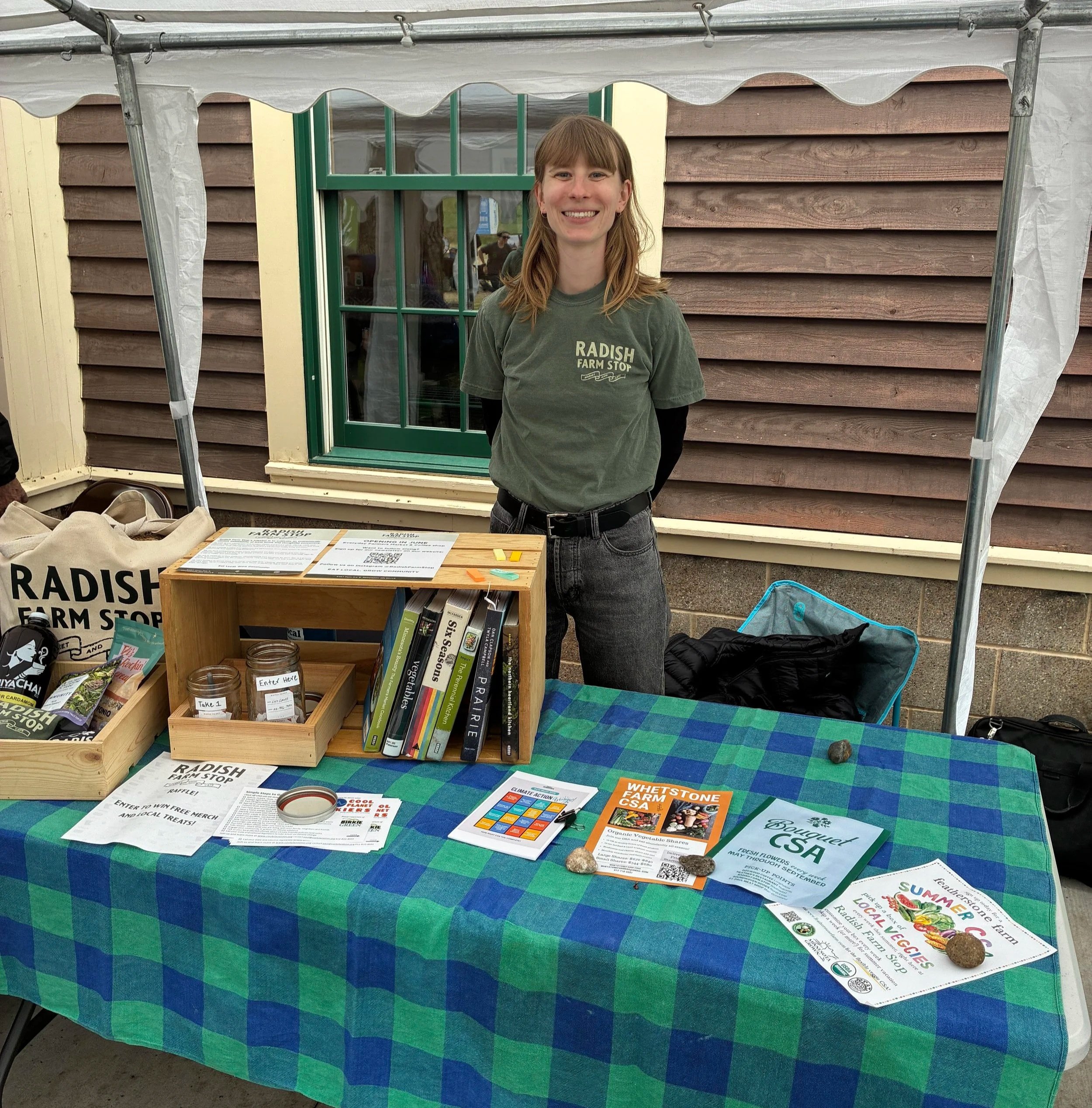
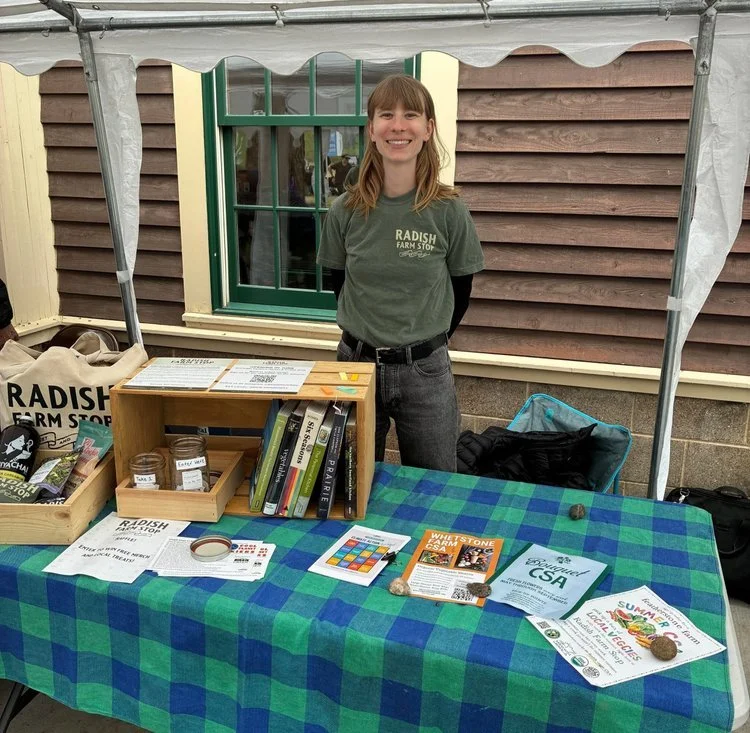
Tabling last weekend at an Earth Day event
First some progress updates:
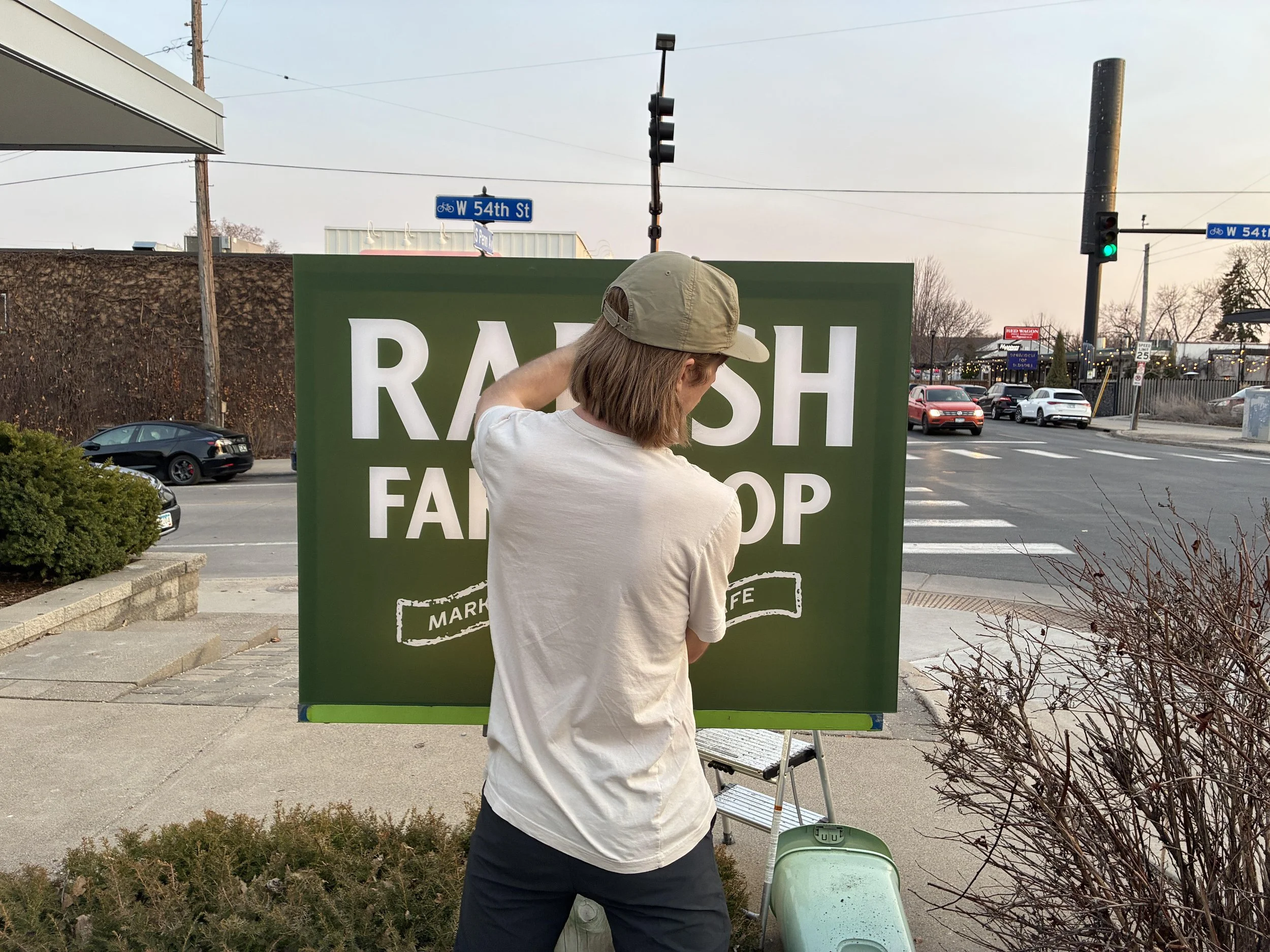
I have learned in the last couple of weeks that we are running a bit behind on construction. We are now hoping to have the rest of the Radish team start at the end of May, with our Grand Opening in the second half of June.
Radish is in the news! I was interviewed on MPR All Things Considered a few weeks ago. Take a listen and please share it with your friends and family!
I had an extended interview with Mark Maynard, owner of Bellflower Restaurant and collaborator with the Argus Farm Stop team, on what the process has been like opening Radish. You can read that below!
What’s been on my mind lately:
I’ve talked with a lot of people the last several months about what we’re doing with Radish— producers, neighbors, reporters, and others in the local food community. The conversations are always interesting, in large part because you never quite know where they are going to go, or what you are each going to learn.
I tabled last weekend at an Earth Day event and talked with many passersby about Radish. Some seemed to understand it right away— excited to have the opportunity to more easily support the local farms and businesses they love. Others had a harder time wrapping their heads around the vision. It can be challenging to cover off on all the mechanics of a Farm Stop in a brief elevator pitch. So, I want to take the opportunity to talk more about the Farm Stop model, and how it works in tandem with our local food system.
What is Radish?
Radish will be the first “farm stop” in the state of Minnesota. We are a 100% local, direct from producer grocery store and coffee shop.
Operating as a year-round everyday farmers’ market and cafe, we aim to improve market access for local producers and small businesses, while connecting customers to delicious local products!
To unassuming passersby, Radish will look like a small grocery store and cafe, merchandised by category, with eye catching displays and everything you need to make a delicious dinner that night. But, we’re a lot more than that.
We’re unique in that we will sell the products on consignment which means that producers set the price, own the product throughout (like a farmer’s market!), and earn 70% of every sale (compared to only 12–40% at typical grocery stores).
This promotes a vibrant marketplace where we are able to support a robust assortment of local producers, and foster a more transparent food system.
The mechanics of the model create a store where every dollar spent supports our local food system, and creates a marketplace filled with high quality seasonal products that are often delivered directly by the farmer who grew them.
In this way you are able to truly know your farmer and your food.
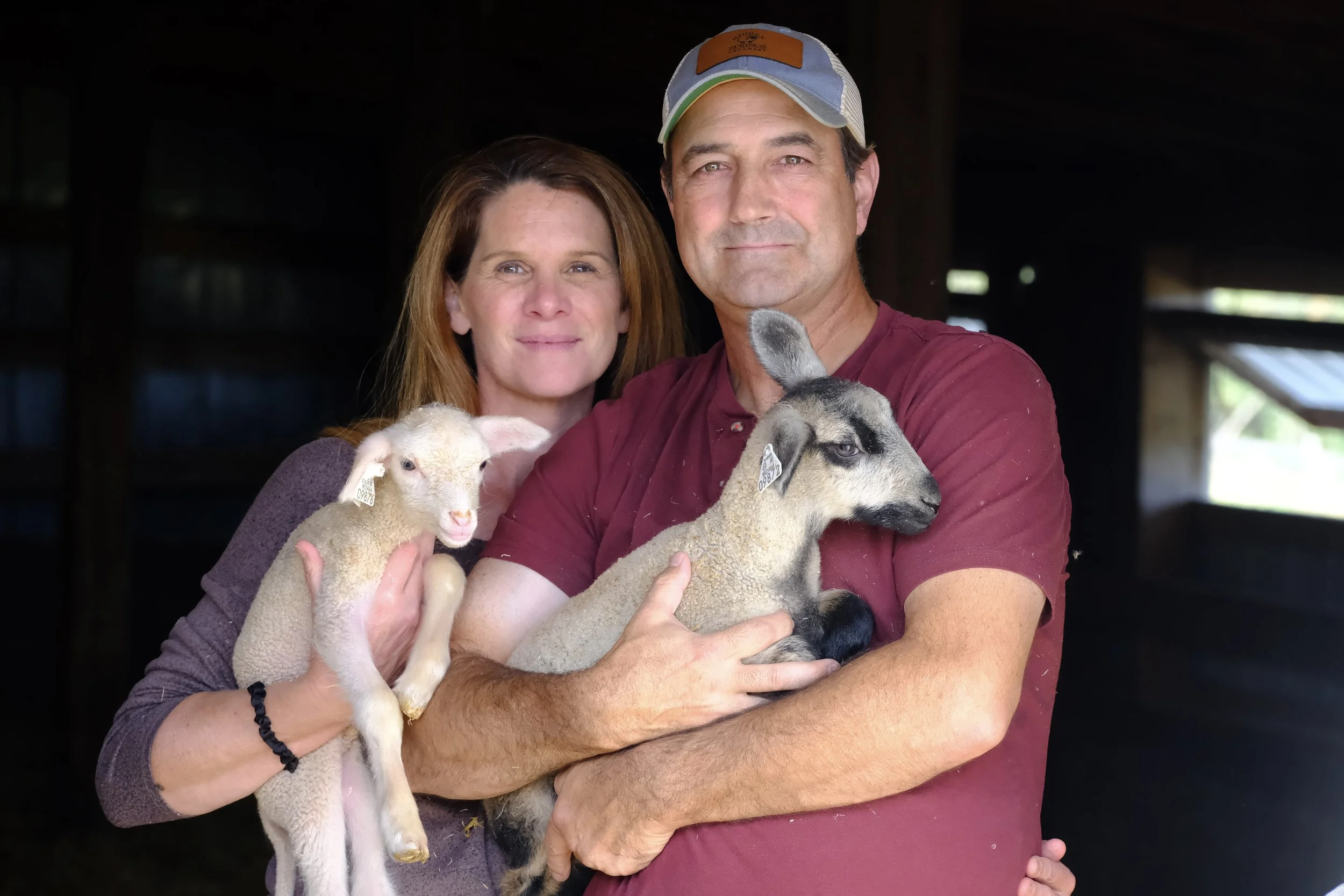
Amy and Travis of Hidden Springs Creamery
What is different about Radish?
1. Better margin for producers and less time spent marketing
The USDA reports that farms received on average 11.8 cents to the dollar of product sold through traditional sales channels in 2024. The remaining portion of the food dollar— the marketing share— covers the costs of middlemen and others, before it gets to your plate. If you’re curious to read more, here’s a webpage that shows an interesting breakdown by category. In 2022, the food dollar was 14.9 cents per dollar.
This downward trend is attributed to consumers purchasing more prepared food and the growth in large grocery store consolidation, creating purchasing power that drives farmers margins down.
An alternative sales avenue to grocery stores and other conventional distributors is farmers markets: for farmers or small businesses who sell at farmers market, this higher margin market access is fantastic, but it can be very labor intensive: 12+ hour market days that are susceptible to weather and other variables.
Farm Stops address both challenges: providing a place where farmers can sell their products everyday year-round, where the marketing and sales is taken care of for them, and they receive 70% margin on sold goods.
2. Market access
Often small farmers or businesses aren’t able to break into the market and sell at a grocery store or co-op. They may not operate at a large enough scale, or been able to “prove” the concept yet. In this way Radish acts as a business incubator. Creating a place where its easier for producers to test out new products, or demonstrate customer demand. The money they make from the store allows them to reinvest in their business, scale, and perhaps grow into larger markets.
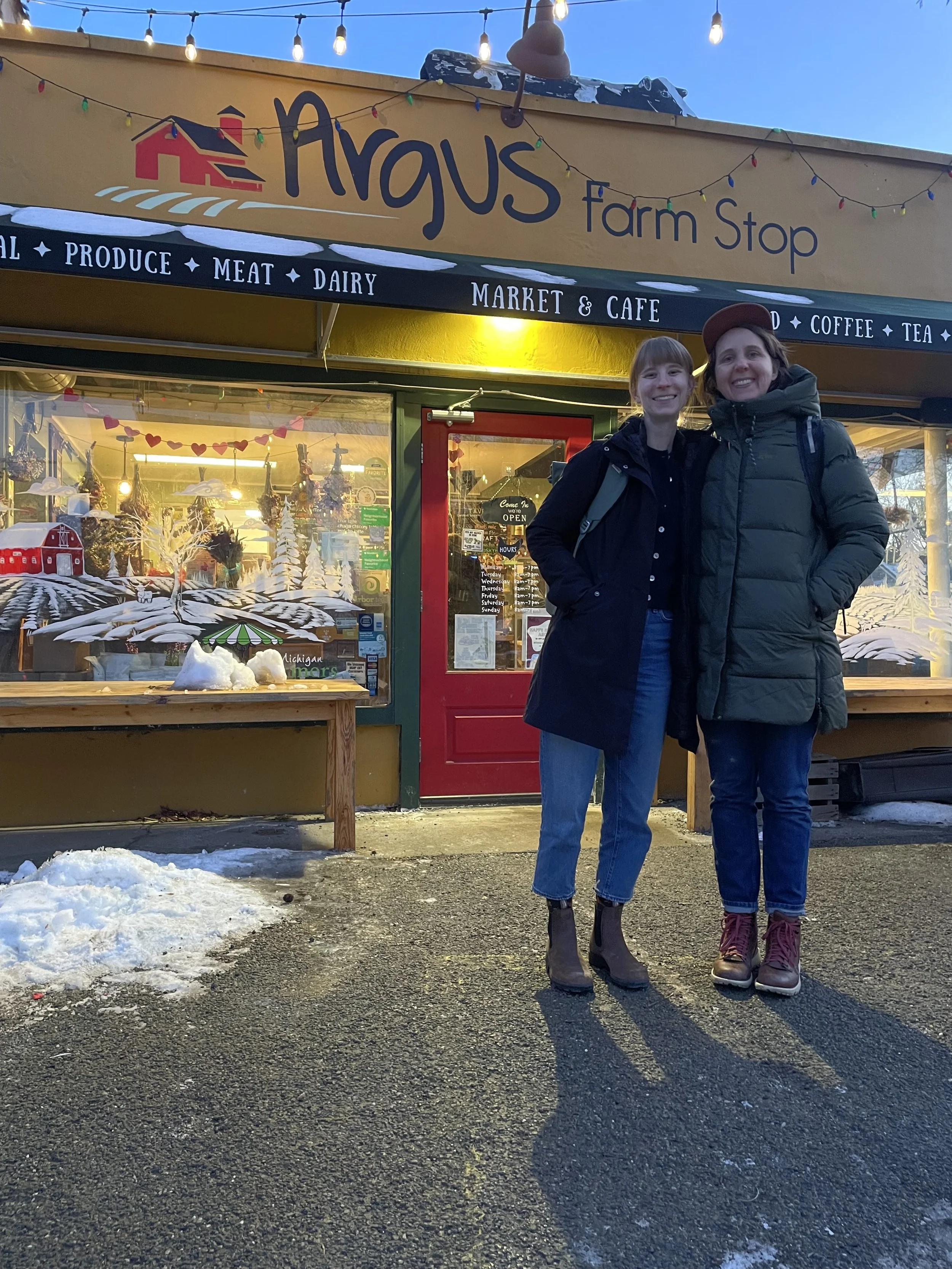
Argus Farm Stop, in Ann Arbor MI has seen this play out with their producers: the county they are located in, Washtenaw, is now the #1 county in Michigan for growth in number of farms producing vegetables, and they’ve paid out over $26 million to local farms since they opened in 2014. Their top 87 producers had over $10,000 in sales at Argus alone last year.
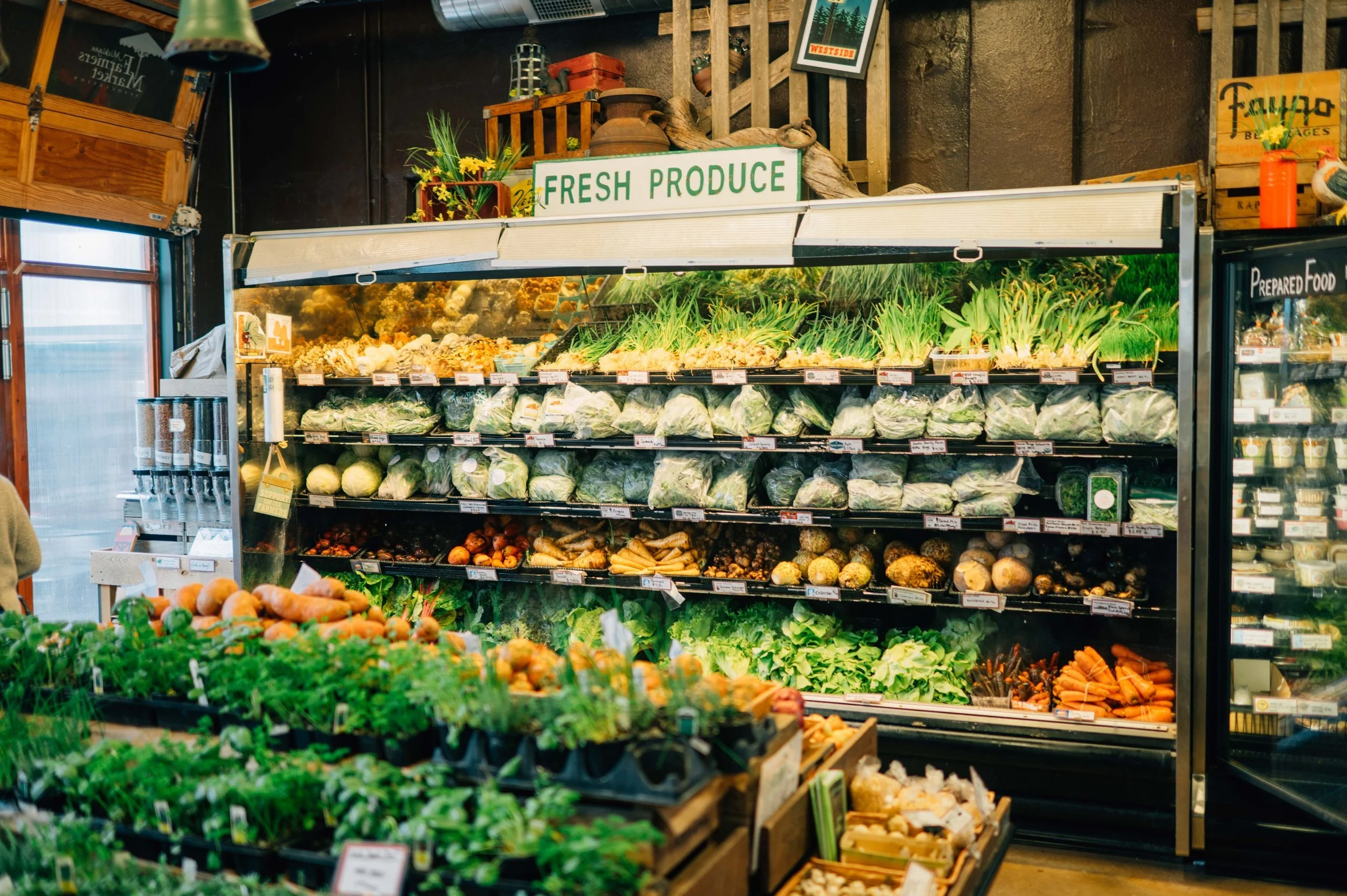
Argus Farm Stop’s produce department
3. Encouraging Product Diversity and Variety
By selling on consignment, producers are able to experiment with product offerings like they would at a farmers market.
Supporting local farms also supports crop diversity: you know how the typical grocery store tomato tends to be pink and mealy? Not all tomatoes are like this! Standard grocery store tomatoes are bred to be able to survive a long journey to you. In the process, they lose their delicious flavor and texture.
The fresh, locally grown tomatoes we’ll have at Radish are juicy, colorful and bursting with flavor. Radish and other farm stops are encouraging crop diversity by providing an outlet for local farms to market and sell a broader range of products than conventional stores.
You’ll find our appreciation for variety extending beyond just produce, into our fridges, freezers, and shelves. Diverse cuts and breeds of meat, varied cheeses, and a wide range of fresh local breads are just a few examples.
4. Season extension & supporting farms year-round
I am often asked: what are you going to sell in the winter? While folks are right to wonder about seasonal impacts to our offerings, don’t worry. The majority of products on our shelves won’t change much, and the produce section will adapt.
We are lucky to have several local hydroponic growers that will supply us with fresh greens and sprouts all winter long. We’ll have storage crops (like squash, carrots, and apples), and local frozen fruits and vegetables as well. While in our first winter we may still be getting our footing, other farm stops have found that by establishing a year round outlet for farms, season extension is encouraged. Experimentation, and investment in greenhouses, high tunnels and other methods are just a few ways to prolong the growing season.
We will also encourage customers to experiment with seasonal cooking— and are gathering a collection of seasonal cookbooks available to help customers make the most of Minnesota’s delicious winter offerings.
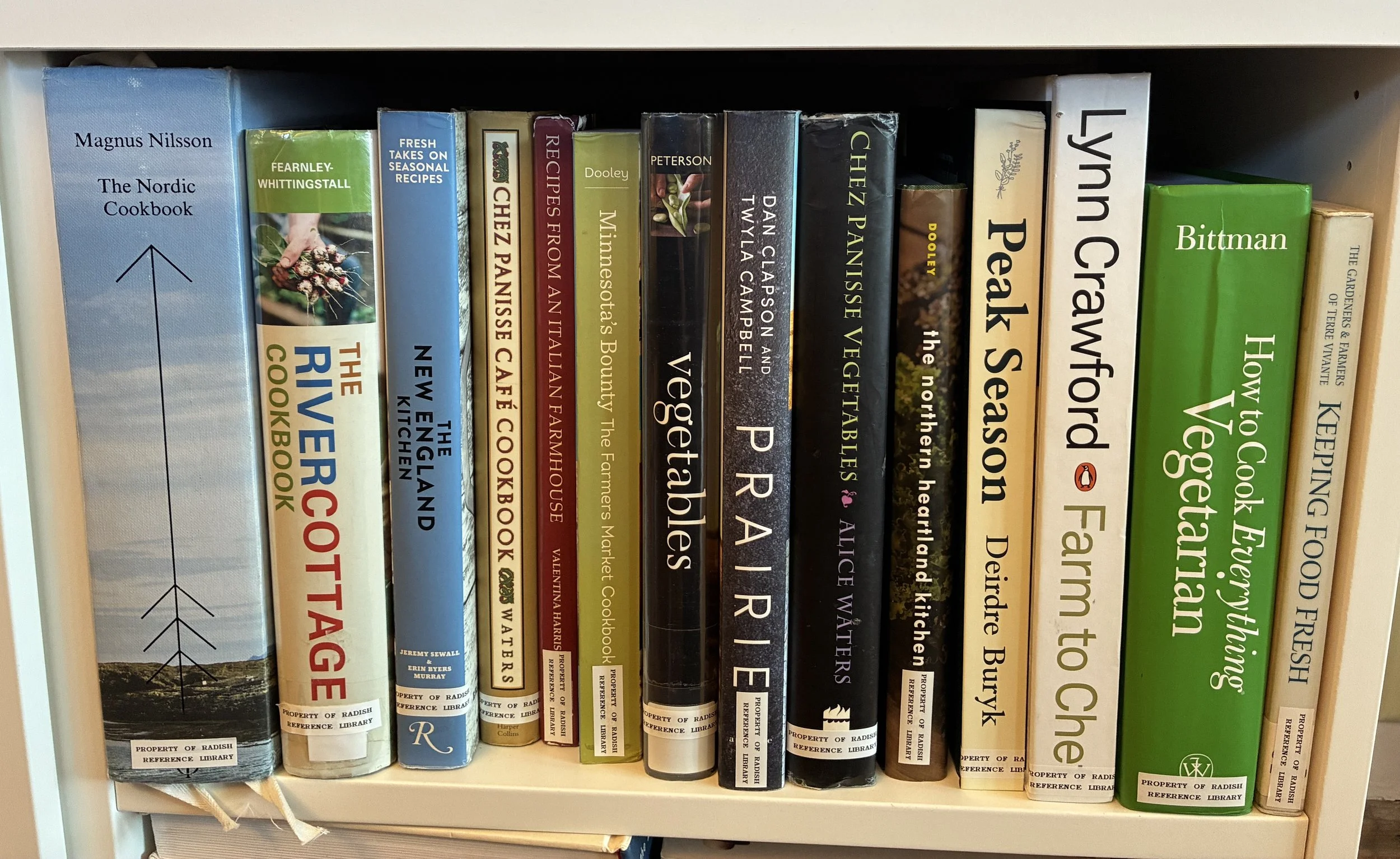
A glimpse of some the cookbooks we’ll have available to reference
5. Community connection and transparency
We envision Radish as a “stop”ing place that welcomes all the participants of our food system. The farm stop name was originally coined by Argus Farm Stop — the name indicates that the store can be a brief stop in the busy days of farms and customers.
Farmers (and producers) will get free coffee when they drop off a delivery, and we will encourage them to stop and pause for a bit of conversation and community. Importantly, we then step in and act as stewards of their products, taking care of the marketing, merchandising, and retail on their behalf.
In this way, we are able to make it easier for customers to support their local food economy, and help farmers spend more time doing what they love: creating, preparing, and eating delicious food. We are working on building a community hub where people can come and support their local food system everyday, while knowing exactly where their food comes from, and how it was grown or produced.
CSAs Available for Pickup at Radish
In addition to the full market offerings at Radish, we will also be serving as a pickup spot for three fantastic local farms, check them out!
Whetstone Farm (Pickup Friday)
Featherstone Farm (Pickup Wednesday)
Northerly Flora Floral CSA! (Pickup Friday)
The Northerly Flora CSA makes a great gift! Especially if you still aren’t sure what to get your Mom for Mothers Day (wink wink).
Wondering what a CSA is? Community Supported Agriculture (CSA) is a farming model where consumers purchase "shares" of a local farm's harvest in advance, receiving weekly, seasonal, or fresh, local produce while sharing the risks and benefits of farming with the producer. It's a fantastic way to support a more sustainable food system and connect directly with your local farms.
Thank you for reading!